
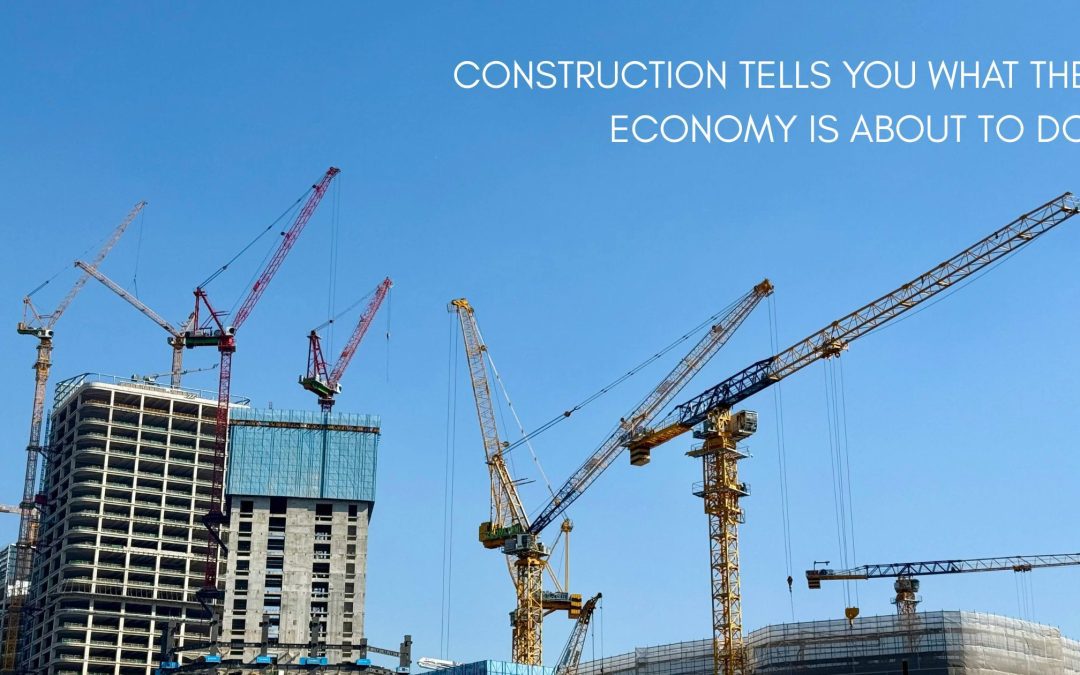
If you want to understand what the economy is ‘really’ about to do, stop watching the headlines and start watching construction.
Construction doesn’t move on sentiment. It moves on permission, design, funding, and schedules. That chain leaves fingerprints early, long before the numbers show up in a macro report.
The mistake I see is business owners reacting late. They feel the slowdown when variations dry up, when tenders get weird, when the diary starts to thin, when clients suddenly “need another sign-off”. By then, you’re in response mode. The useful part is earlier.
The early signal shows up upstream. Planners and architects feel the mood shift first because that’s where intent becomes activity. When planning enquiries slow, when pre-app conversations drag, when architects say their pipeline has gone quiet, that’s the market whispering. Main contractors feel it next through tender volumes, bid quality, and procurement timelines. Trades feel it last, and when they feel it, it’s already in the bloodstream.
Recovery is the reverse. Trades get busy as projects restart, then main contractors, then design and planning ramp again. That’s why people who actually live in the chain often spot the turn before economists do.
So what do you do with it? You stop making big calls off of noise in the media. Hiring decisions should be tied to real pipeline quality, not just a busy fortnight. Bidding strategy should tighten when you see desperation pricing, because that’s when bad work floods the market. Cash discipline should get stricter when payment cycles start stretching, because that’s when good businesses get dragged under by someone else’s delays.
Timing matters, but not in a “market timing” fantasy way. It’s about reading movement on the real landscape and making decisions early enough that you still have options. Headlines arrive late. The chain tells you first.