
A lot of owners say the same thing with a kind of pride: the business needs me. Sometimes that is true. It is also usually a warning sign.
In founder-led construction businesses, owner dependency often gets mistaken for strength. The owner knows every client, approves every quote, settles every dispute, hires the staff, watches the jobs and acts as the link between commercial and operations. From the outside, that can look like commitment. In reality, it often means the company has not been built properly yet.
If everything runs through one person, the business is not strong. It is exposed. That exposure shows up in a few ways.
First, it limits scale. There are only so many decisions one person can make well, and only so much friction one person can absorb before the quality starts to drop. Growth then becomes messy because the business has grown around the owner’s energy, not around a structure that can hold more complexity.
Second, it creates operational risk. If the owner is ill, distracted, burnt out or pulled into one major problem, everything else slows down. Quotes wait. Clients wait. Decisions stall. Teams start looking upward for answers they should already be able to handle.
Third, it drags value down. Whether an owner wants to sell or not, the same principle still applies. A business is stronger when it can run cleanly without depending on one central figure to keep the whole thing stitched together.
That is what management depth is really about.
Not hierarchy for the sake of it. Not corporate theatre. Just a first line management team with clear role ownership and enough confidence to make decisions, solve problems and carry responsibility properly.
In practice, that means the owner should not be the only person trusted with clients. Not the only one who understands the numbers. Not the only one who can resolve site issues. Not the only one who knows where the business is heading.
This is uncomfortable for some founders because stepping back feels like losing control. It isn’t.
Done properly, it is replacing personal control with business control. That is a better model. It creates consistency, protects culture and gives the owner space to think about direction instead of getting trapped in daily noise.
I’ve seen businesses where the owner is everywhere, all the time, and still believes that proves quality. Usually it proves the opposite. It shows the team has not been built, the roles are not clear, and too much is still sitting in one person’s head.
That might work for a while. It does not age well.
You do not need to be planning an exit for this to matter. The same things that make a business more sellable also make it more resilient. Better managers. Clearer reporting. Cleaner delegation. More repeatable delivery. Less founder drag. That is just good building.
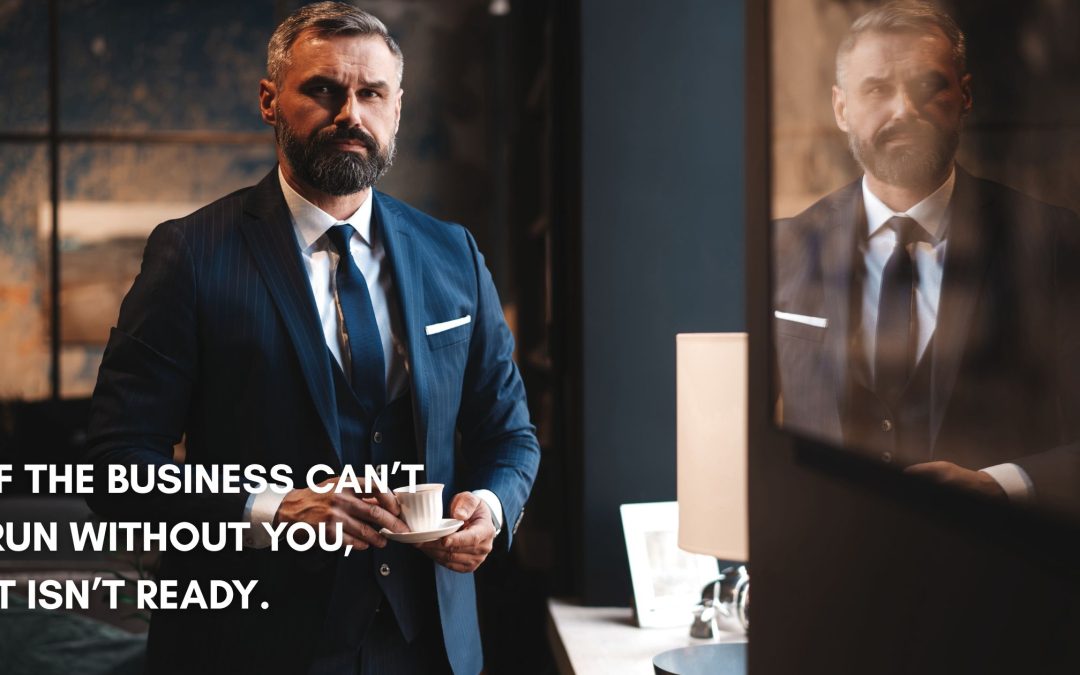
If the business cannot move without you, then you have not built freedom. You have built dependency.
And dependency is fragile, however successful it may look from the outside.